
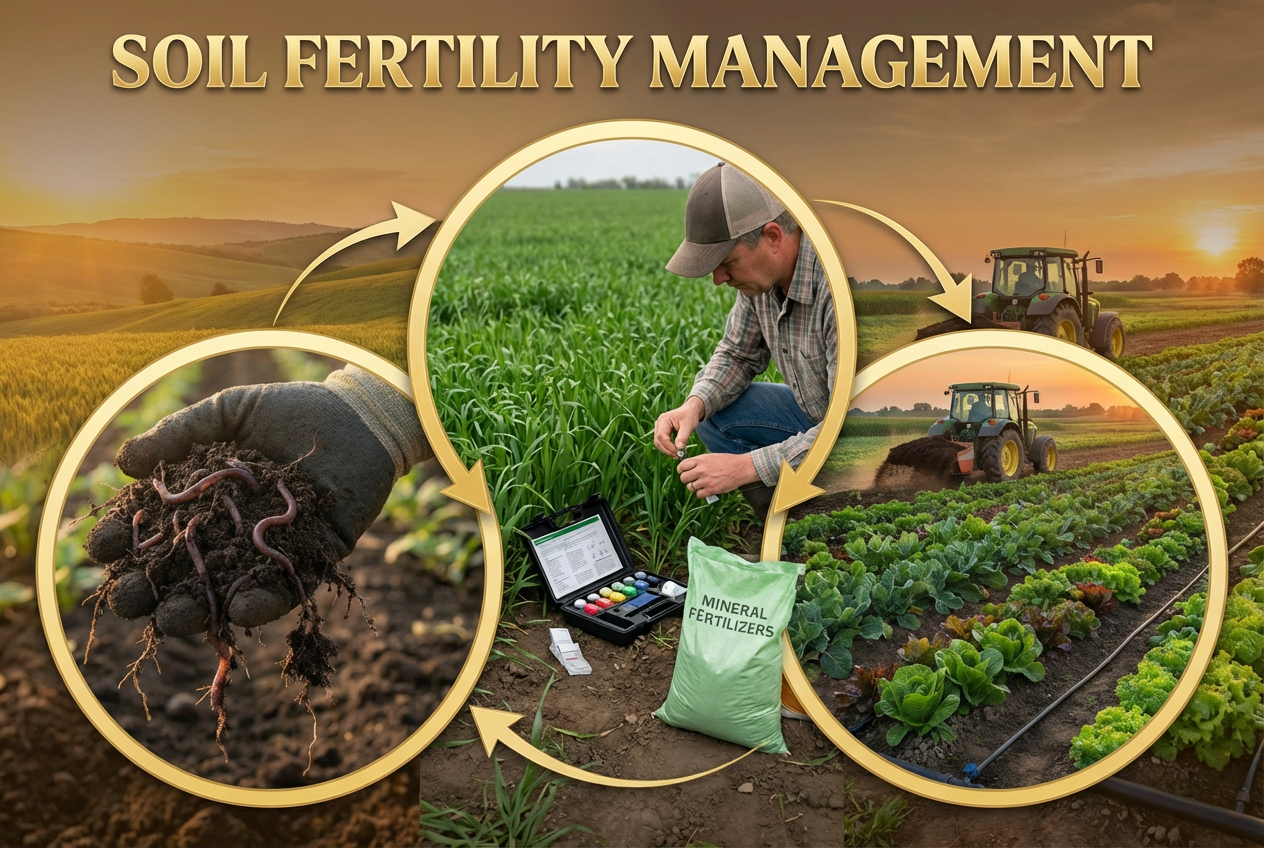
Soil Fertility Management: Your Complete Guide to Productive, Sustainable Soil
What is Soil Fertility?
Soil fertility refers to the soil’s capacity to provide essential nutrients in adequate amounts and proper balance for plant growth. Fertile soil contains sufficient organic matter, beneficial microorganisms, proper pH levels, and optimal physical structure to support healthy crops.
Essential Plant Nutrients
Plants require 17 essential nutrients for optimal growth
Nitrogen
Promotes leaf growth and green color
Phosphorus
Supports root development and flowering
Potassium
Enhances disease resistance
Calcium
Strengthens cell walls
Magnesium
Essential for photosynthesis
Sulfur
Protein synthesis
Soil Testing: The Foundation of Fertility Management
Sample Collection
Collect soil samples from multiple locations at 6-8 inch depth using clean tools
Laboratory Analysis
Send samples to certified labs for comprehensive nutrient and pH testing
Interpret Results
Review test results to identify nutrient deficiencies and imbalances
Develop Plan
Create a customized fertilization and amendment strategy based on crop needs
Implement & Monitor
Apply amendments and track plant response throughout the growing season
Key Soil Fertility Management Practices
Organic Matter Addition
Incorporate compost, manure, and crop residues to improve soil structure, water retention, and nutrient availability while supporting beneficial microorganisms.
Cover Cropping
Plant cover crops during off-seasons to prevent erosion, fix nitrogen, suppress weeds, and add organic matter when incorporated into the soil.
Crop Rotation
Rotate different crop families to break pest cycles, balance nutrient uptake, and naturally improve soil health without depleting specific nutrients.
pH Management
Adjust soil pH using lime (to raise) or sulfur (to lower) to optimize nutrient availability. Most crops prefer pH 6.0-7.0.
Balanced Fertilization
Apply fertilizers based on soil test results and crop requirements, using the right source, rate, timing, and placement method.
Minimal Tillage
Reduce soil disturbance to preserve soil structure, prevent erosion, maintain organic matter, and protect beneficial soil organisms.
Benefits of Proper Soil Fertility Management
- Increased crop yields and quality through optimal nutrient availability
- Reduced fertilizer costs by applying only what crops actually need
- Enhanced soil structure improving water infiltration and root penetration
- Greater drought resistance from improved water-holding capacity
- Reduced environmental pollution from nutrient runoff and leaching
- Improved carbon sequestration contributing to climate change mitigation
- Increased beneficial microbial activity supporting plant health
- Long-term agricultural sustainability and farm profitability
Common Soil Fertility Challenges
Nutrient Depletion
Continuous cropping without adequate replenishment removes essential nutrients faster than natural processes can restore them.
Soil Acidification
Excessive nitrogen fertilizer use, acid rain, and natural leaching can lower soil pH, reducing nutrient availability.
Organic Matter Loss
Intensive tillage, erosion, and lack of organic inputs reduce soil organic matter, degrading soil structure and fertility.
Nutrient Imbalance
Over-application of certain nutrients can create imbalances that interfere with the uptake of other essential elements.
Start Your Soil Fertility Journey Today
Healthy soil is the foundation of productive agriculture. Begin with a comprehensive soil test and develop a customized fertility management plan for your specific conditions.
Sustainable Fertility Management Tips
Test Regularly
Conduct soil tests every 2-3 years to monitor nutrient levels and track changes over time.
Use Organic Sources
Prioritize compost, manure, and green manures to build long-term soil health.
Apply Efficiently
Use precision agriculture techniques to apply fertilizers only where and when needed.
Protect Topsoil
Implement erosion control measures to prevent loss of nutrient-rich topsoil.
Also Read: