Bonsai Fertilizer: A Complete Guide for Beginners
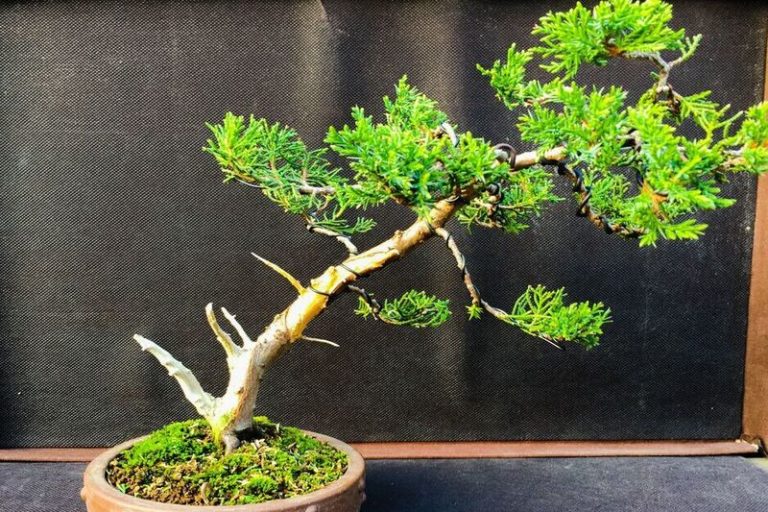
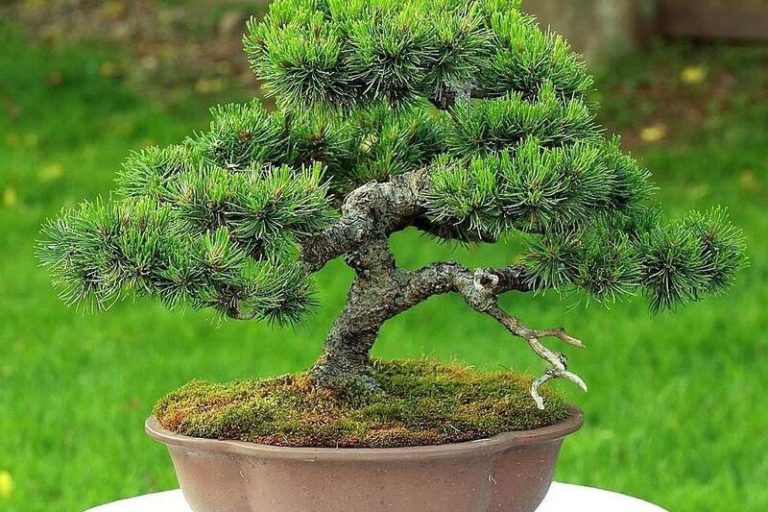
If you’ve ever wondered why some bonsai trees look healthy and vibrant while others seem weak and tired, the answer often lies in one simple thing: fertilizer. Just like how you need food to grow and stay healthy, bonsai trees need nutrients to thrive. But here’s the catch – bonsai trees live in tiny pots with limited soil, so they can’t get all the nutrients they need naturally. That’s where fertilizer comes in.
In this guide, we’ll break down everything you need to know about bonsai fertilizer in simple terms. Whether you’re completely new to bonsai or you’ve been growing these miniature trees for a while, understanding fertilizer will help you keep your trees healthy, strong, and beautiful.
Don’t worry if chemistry wasn’t your favorite subject in school. We’ll explain everything in plain English, with practical tips you can use right away.
What is Fertilizer?
Let’s start with the basics. Fertilizer is essentially plant food – a mixture of nutrients that plants need to grow. Think of it like vitamins for your bonsai tree.
In nature, trees growing in the ground get nutrients from the soil, fallen leaves, decomposing organic matter, and even from rain. Their roots can spread far and wide, searching for what they need. But a bonsai tree lives in a small pot with limited soil. The nutrients in that soil get used up quickly or wash away when you water. That’s why we need to add fertilizer regularly.
Why Bonsai Trees Need Fertilizer
Here’s a simple comparison: Imagine trying to live your entire life getting food from a lunchbox that never gets refilled. That’s basically what a bonsai tree faces without fertilizer. The small amount of soil in a bonsai pot can only provide so many nutrients before they’re depleted.
Without proper fertilization, your bonsai will:
- Grow very slowly or stop growing altogether
- Develop yellow or pale leaves
- Have weak, thin branches
- Be more susceptible to diseases and pests
- Eventually die from malnutrition
With proper fertilization, your bonsai will:
- Grow strong, healthy branches
- Develop vibrant, colorful foliage
- Resist diseases better
- Produce flowers and fruit (if it’s a flowering species)
- Live for many years, even decades
The Three Main Nutrients: N-P-K
Every fertilizer package has three numbers on it, like 10-10-10 or 5-10-5. These numbers represent the three main nutrients plants need, and they’re always listed in the same order:
Nitrogen (N) – The First Number
What it does: Nitrogen is like protein for plants. It’s essential for leaf and stem growth and gives leaves their green color.
Signs of deficiency: Yellow leaves, especially older leaves at the bottom of the tree. Slow, weak growth.
Signs of excess: Very dark green leaves, lots of soft, weak growth that’s prone to disease.
Best for: Trees in their growing phase, deciduous trees in spring, and any tree that looks pale or isn’t growing well.
Phosphorus (P) – The Second Number
What it does: Phosphorus helps with root development, flower production, and overall energy transfer within the plant. Think of it as the nutrient that helps your tree mature and reproduce.
Signs of deficiency: Poor root growth, no flowers (on flowering trees), purple or reddish tint to leaves.
Signs of excess: Less common, but can interfere with the uptake of other nutrients.
Best for: Newly repotted trees (helps roots establish), flowering trees before bloom time, and young trees developing their root system.
Potassium (K) – The Third Number
What it does: Potassium is like the immune system booster. It helps trees resist disease, tolerate cold, and use water efficiently. It also helps with overall vigor and hardiness.
Signs of deficiency: Brown edges on leaves, weak branches, poor cold tolerance, susceptibility to disease.
Signs of excess: Rare in bonsai, but can block calcium and magnesium uptake.
Best for: Preparing trees for winter, trees under stress, and maintaining overall health.
Types of Bonsai Fertilizer
Fertilizers come in many forms, and each has its pros and cons. Let’s look at the most common types:
Liquid Fertilizer
What it is: A concentrated liquid that you dilute with water before applying.
Pros:
- Works quickly – nutrients are immediately available to roots
- Easy to apply – just mix with water and pour
- Easy to adjust strength for different needs
- Good for foliar feeding (spraying on leaves)
- No risk of burning roots if properly diluted
Cons:
- Needs frequent application (usually every 1-2 weeks)
- Can wash out of soil quickly with heavy watering
- Easy to forget to apply
- Must store properly (can spoil)
Best for: Beginners, indoor bonsai, trees that need quick nutrient boost, precise feeding schedules.
Popular brands: Miracle-Gro, Schultz, Dyna-Gro
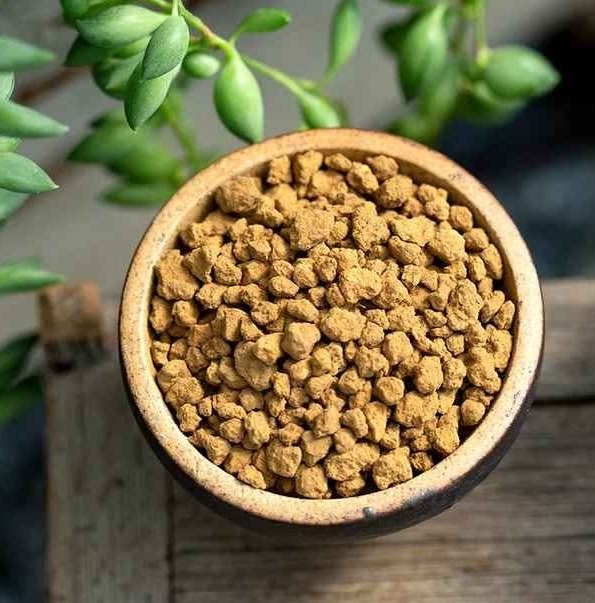
Granular/Pellet Fertilizer
What it is: Solid pellets or granules you place on the soil surface.
Pros:
- Slow-release – feeds tree over several weeks
- Easy to see when it’s time to reapply (pellets dissolve)
- Less frequent application needed
- Traditional choice for bonsai enthusiasts
- Works with natural watering schedule
Cons:
- More expensive than liquid
- Can develop mold (harmless but unsightly)
- May attract insects or animals
- Takes longer to see results
- Can be knocked off by birds or wind
Best for: Outdoor bonsai, experienced growers, people who travel frequently, traditional bonsai culture.
Popular types: Biogold, Hanagokoro, organic rapeseed cakes
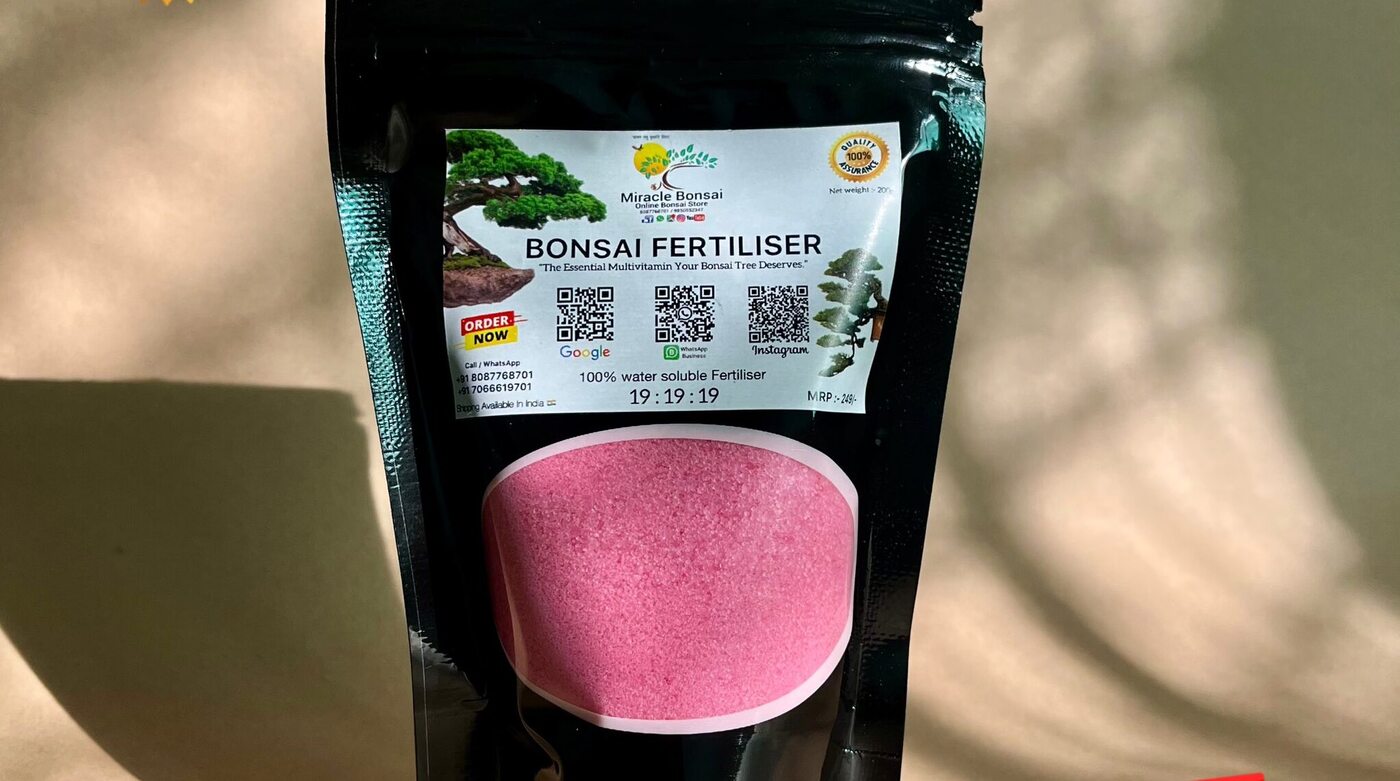
Powder Fertilizer
What it is: Dry powder that you mix with water or sprinkle on soil.
Pros:
- Concentrated – a little goes a long way
- Long shelf life
- Can be used as liquid or solid
- Often less expensive
- Easy to store
Cons:
- Must be mixed properly (risk of burning if too strong)
- Can be messy
- Powder may cake if stored improperly
- Need to measure carefully
Best for: Experienced growers, large collections, people wanting to save money.
Organic vs. Chemical Fertilizer
Organic fertilizers come from natural sources like fish, seaweed, manure, bone meal, or plant materials.
Advantages:
- Gentle on roots – less risk of burning
- Improve soil structure over time
- Release nutrients slowly and steadily
- Contain trace minerals
- Better for soil microorganisms
Disadvantages:
- More expensive
- May smell bad (fish emulsion!)
- Slower to show results
- Nutrients vary between batches
- May attract pests
Chemical (synthetic) fertilizers are manufactured with precise nutrient ratios.
Advantages:
- Cheaper
- No smell
- Precise nutrient ratios
- Work quickly
- Predictable results
Disadvantages:
- Can burn roots if over-applied
- Don’t improve soil structure
- Can build up salt in soil
- May harm beneficial soil organisms
- Environmental concerns
Our recommendation: Many experienced bonsai growers use both. Organic fertilizers as the main food source, and chemical fertilizers for quick correction of deficiencies or to give a boost before important times like flowering.
Fertilizer Ratios: What Do Those Numbers Mean?
Remember those three numbers we talked about? Let’s dig deeper into what different ratios mean for your bonsai.
Balanced Fertilizer (10-10-10 or 20-20-20)
All three numbers are equal. This is your all-purpose, general maintenance fertilizer.
Use for:
- General feeding during growing season
- Healthy trees that don’t have special needs
- When you’re not sure what to use
- Most conifers and evergreens
- Beginners (keep it simple!)
High Nitrogen (like 30-10-10)
More nitrogen than phosphorus or potassium.
Use for:
- Spring growth on deciduous trees
- Trees with pale or yellow leaves
- Promoting leaf and branch growth
- After severe pruning
- Young trees in development
High Phosphorus (like 10-30-10)
More phosphorus than nitrogen or potassium.
Use for:
- Flowering trees before bloom season
- Fruiting trees
- Recently repotted trees (promotes root growth)
- Trees recovering from root work
- Late spring/early summer for flowering species
High Potassium (like 10-10-30 or 0-10-10)
More potassium than the other nutrients.
Use for:
- Fall feeding to prepare for winter
- Strengthening branches
- Improving disease resistance
- Trees under stress
- Preparing for cold weather
Fertilizing Schedule: When and How Often
Timing is almost as important as the type of fertilizer you use. Here’s a seasonal guide:
Spring (March-May)
What’s happening: Trees are waking up, new growth is starting, trees need lots of energy.
Fertilizing approach:
- Start fertilizing when buds begin to swell
- Use balanced or high-nitrogen fertilizer
- Fertilize every 1-2 weeks
- Increase frequency as growth accelerates
Special note: For flowering trees, switch to high-phosphorus fertilizer 4-6 weeks before expected bloom time.
Summer (June-August)
What’s happening: Peak growing season, trees are actively growing, high nutrient demand.
Fertilizing approach:
- Continue regular feeding every 1-2 weeks
- Use balanced fertilizer for most trees
- May need to fertilize more often in extreme heat (nutrients wash out faster)
- Watch for signs of over-fertilizing (very dark green leaves, soft growth)
Special note: During extreme heat (above 90°F/32°C), some growers reduce fertilizing since growth may slow.
Fall (September-November)
What’s happening: Trees are preparing for winter, growth is slowing, storing energy for spring.
Fertilizing approach:
- Switch to low-nitrogen, high-potassium fertilizer (like 0-10-10)
- Reduce frequency to every 3-4 weeks
- Stop nitrogen-rich fertilizer 4-6 weeks before first frost
- Give one final feeding with high-potassium fertilizer before dormancy
Special note: Fall fertilizing helps trees harden off and prepares them for winter stress.
Winter (December-February)
What’s happening: Most trees are dormant, growth has stopped, minimal nutrient needs.
Fertilizing approach:
- Stop fertilizing deciduous trees completely
- Evergreen conifers may get very light feeding once per month (optional)
- Tropical/indoor bonsai continue light feeding monthly
- This is rest time for most trees
Special note: Never fertilize trees in freezing temperatures or when soil is frozen.
Seasonal Fertilizing Calendar Table
| Season | Frequency | Fertilizer Type | What’s Happening |
|---|---|---|---|
| Early Spring | Every 2 weeks | Balanced (10-10-10) | Buds swelling, growth starting |
| Late Spring | Every 1-2 weeks | High-N (20-10-10) or High-P for flowers | Active growth, flowering |
| Summer | Every 1-2 weeks | Balanced (10-10-10) | Peak growth period |
| Early Fall | Every 2-3 weeks | Balanced to Low-N | Growth slowing |
| Late Fall | Every 3-4 weeks | High-K (0-10-10) | Preparing for dormancy |
| Winter | None to monthly | Very dilute or none | Dormant period |
How to Apply Fertilizer
The method matters! Here’s how to do it right:
For Liquid Fertilizer
- Read the label – Always start here! Different products have different dilution rates.
- Mix properly – Most liquid fertilizers are concentrated. For bonsai, use half the strength recommended for houseplants. Example: If the label says “1 tablespoon per gallon,” use only 1/2 tablespoon per gallon for bonsai.
- Water first – Always water your tree with plain water first, then apply fertilizer water. This prevents root burn.
- Apply evenly – Pour the fertilizer solution evenly over the soil surface until it drains from the bottom.
- Avoid leaves – Try not to get fertilizer on foliage (unless doing foliar feeding).
- Rinse occasionally – Every few weeks, water thoroughly with plain water to flush out any salt buildup.
For Pellet/Granular Fertilizer
- Place on surface – Put pellets on top of the soil, not buried.
- Spacing – For a typical 6-8 inch pot, use 3-5 pellets spaced evenly around the pot.
- Keep away from trunk – Place pellets at least 1 inch from the trunk to avoid burning.
- Use baskets – Many growers put pellets in small plastic or wire baskets to keep them in place and make removal easier.
- Replace when dissolved – When pellets shrink to about half their original size or dissolve completely, add fresh ones.
- Remove in fall – Take off old pellets when you stop fertilizing for winter.
For Foliar Feeding
Some growers spray diluted liquid fertilizer directly on leaves. This provides a quick nutrient boost.
How to do it:
- Use very dilute fertilizer (1/4 strength)
- Spray early morning or evening (never in hot sun)
- Spray both sides of leaves
- Do this in addition to, not instead of, root feeding
- Only during growing season
Common Fertilizing Mistakes
Mistake #1: Over-Fertilizing
The problem: More is not better! Too much fertilizer can burn roots, cause excessive soft growth, attract pests, and build up harmful salts in soil.
Signs of over-fertilizing:
- White crust on soil surface or pot rim (salt buildup)
- Very dark green, soft growth
- Leaf tips turning brown
- Excessive growth that’s weak and disease-prone
Solution: Flush soil with plain water, reduce fertilizer strength and frequency, repot if salt buildup is severe.
Mistake #2: Under-Fertilizing
The problem: Bonsai trees in small pots need regular feeding. Forgetting to fertilize leads to weak, unhealthy trees.
Signs of under-fertilizing:
- Pale, yellow leaves
- Very slow or no growth
- Small, sparse leaves
- Weak branches
- Overall unhealthy appearance
Solution: Resume regular fertilizing schedule, consider a quick boost with liquid fertilizer, check for other problems (pests, disease, watering issues).
Mistake #3: Wrong Timing
The problem: Fertilizing at the wrong time, like late fall or during dormancy, can stimulate unwanted growth or waste nutrients.
Solution: Follow the seasonal schedule above, stop fertilizing deciduous trees in winter, don’t fertilize sick trees until they recover.
Mistake #4: Fertilizing Dry Soil
The problem: Applying fertilizer to dry roots can cause severe root burn.
Solution: Always water first with plain water, then apply fertilizer solution within 30 minutes.
Mistake #5: Using Old or Improperly Stored Fertilizer
The problem: Fertilizer can lose potency or become contaminated over time.
Solution: Store liquid fertilizer in cool, dark place; use within 1-2 years; powder/granules last longer if kept dry; when in doubt, buy fresh.
Special Situations
Newly Acquired Trees
When you first get a bonsai:
- Don’t fertilize for 2-4 weeks (let tree adjust to new environment)
- Start with half-strength fertilizer
- Gradually increase to normal strength over a month
After Repotting
- Don’t fertilize for 4-6 weeks after repotting
- Roots need time to heal and establish
- Start with very dilute fertilizer (1/4 strength)
- Gradually increase over next month
Sick or Stressed Trees
- Don’t fertilize sick trees (they can’t use nutrients effectively)
- Fix the underlying problem first
- Wait until tree shows signs of recovery
- Resume with very gentle, dilute fertilizer
Indoor vs. Outdoor Bonsai
Outdoor bonsai:
- Follow seasonal schedule
- Stop or reduce feeding in winter
- Can use stronger fertilizer (more light = more growth = more nutrients needed)
Indoor/tropical bonsai:
- Feed year-round (no dormancy)
- Reduce feeding in winter when light is low
- Use gentler fertilizer (less light = slower growth = fewer nutrients needed)
DIY and Natural Fertilizers
Want to make your own fertilizer or use natural alternatives? Here are some options:
Compost Tea
Soak finished compost in water for 24-48 hours, strain, and use the liquid as gentle, organic fertilizer. Rich in micronutrients and beneficial microorganisms.
Fish Emulsion
Available at most garden centers. Made from fish waste, high in nitrogen. Dilute according to package directions. Warning: Smells bad but works great!
Seaweed/Kelp Solution
Excellent source of trace minerals and growth hormones. Use as a supplement to regular fertilizer, not as main food source.
Worm Castings Tea
Similar to compost tea but made from worm castings (worm poop). Very gentle and beneficial for soil health.
Coffee Grounds
A weak source of nitrogen. Can be added to soil in small amounts or made into weak tea. Don’t overdo it – can acidify soil too much.
Eggshells
Source of calcium. Crush finely and sprinkle on soil or steep in water to make calcium water. Works slowly.
Fertilizer Comparison Table
| Type | Frequency | Cost | Speed | Ease of Use | Best For |
|---|---|---|---|---|---|
| Liquid Chemical | 1-2 weeks | $ | Fast | Very Easy | Beginners, quick results |
| Liquid Organic | 1-2 weeks | $$ | Medium | Very Easy | Gentle feeding, soil health |
| Pellets/Cakes | 4-8 weeks | $$$ | Slow | Easy | Traditional method, low maintenance |
| Granular Chemical | 2-4 weeks | $ | Medium | Moderate | Budget-friendly, large collections |
| Powder | 1-2 weeks | $ | Fast-Medium | Moderate | Experienced growers, custom mixes |
| DIY/Natural | Variable | Free-$ | Slow | Easy-Hard | Organic approach, hobbyists |
Reading Fertilizer Labels
Fertilizer labels contain lots of information. Here’s what to look for:
The N-P-K Numbers
Always prominently displayed as three numbers (like 10-5-5). This tells you the percentage by weight of each major nutrient.
Guaranteed Analysis
Lists all nutrients in the product, including micronutrients like iron, manganese, zinc, etc.
Application Instructions
Follow these! Bonsai usually needs less than recommended for regular plants.
Expiration Date
Especially important for liquid fertilizers. Use before this date for best results.
Organic vs. Synthetic
Should be clearly labeled. Organic products list source materials (fish, kelp, etc.).
Micronutrients: The Supporting Cast
Beyond N-P-K, trees need small amounts of other nutrients:
Iron (Fe) – Needed for chlorophyll production. Deficiency causes yellowing between leaf veins.
Manganese (Mn) – Helps with photosynthesis and disease resistance.
Zinc (Zn) – Important for growth hormones. Deficiency causes small leaves.
Copper (Cu) – Needed for various enzyme functions.
Boron (B) – Helps with cell division and fruit development.
Molybdenum (Mo) – Assists in nitrogen use.
Most complete fertilizers include these. Deficiencies are rare if you use quality fertilizer regularly.
Frequently Asked Questions (FAQ)
1. Can I use regular houseplant or garden fertilizer for bonsai?
Yes, you can! The main difference is concentration. Regular fertilizers are formulated for larger plants with more soil, so use them at half the recommended strength for bonsai. A 20-20-20 houseplant fertilizer diluted to half strength works perfectly fine for bonsai. There’s nothing magical about products labeled “bonsai fertilizer” – they’re just pre-diluted or specially packaged regular fertilizer.
2. How do I know if I’m fertilizing too much or too little?
Too much: Look for white crusty deposits on soil surface or pot rim (salt buildup), very dark green soft growth, brown leaf tips, or excessive growth that’s weak and floppy.
Too little: Watch for pale or yellow leaves (especially on new growth), very slow growth, smaller leaves than normal, or overall weak appearance. When in doubt, it’s better to under-fertilize slightly than over-fertilize.
3. Should I fertilize my bonsai in winter?
For most outdoor deciduous trees, no – they’re dormant and can’t use nutrients. For evergreen conifers outdoors, very light feeding once per month is optional but not necessary. For tropical or indoor bonsai that don’t go dormant, continue feeding but reduce frequency to once per month since they grow slower in low winter light.
4. Can I just use Miracle-Gro?
Absolutely! Miracle-Gro is a perfectly acceptable fertilizer for bonsai. Use the all-purpose formula (24-8-16 or similar) at half the recommended strength. Apply every 1-2 weeks during growing season. Many successful bonsai growers use Miracle-Gro. Don’t feel like you need expensive specialty products – regular fertilizer works fine.
5. My fertilizer pellets are growing mold. Is this bad?
No, this is completely normal and harmless! Organic fertilizer pellets often develop white or green mold on the surface. This is just decomposition happening, and it won’t hurt your tree at all. If it bothers you visually, you can brush it off or use pellet baskets. The mold actually indicates the organic matter is breaking down and releasing nutrients.
6. How soon after repotting can I fertilize?
Wait at least 4-6 weeks after repotting before fertilizing. Your tree’s roots need time to heal and establish in the new soil. When you do resume, start with very dilute fertilizer (1/4 to 1/2 strength) and gradually work back up to full strength over a month. Fresh bonsai soil usually contains some nutrients anyway.
7. Is organic or chemical fertilizer better for bonsai?
Both work well – it’s mostly personal preference. Organic fertilizers are gentler, improve soil health, and contain beneficial microorganisms, but they’re more expensive and may smell bad. Chemical fertilizers are cheaper, odorless, work faster, and give predictable results, but can burn roots if over-applied. Many experienced growers use both: organic as the main food and chemical for occasional quick boosts.
8. Can I fertilize when my tree is flowering?
Yes, but switch to a low-nitrogen, high-phosphorus fertilizer (like 5-30-10) about 4-6 weeks before flowering. Once buds form, reduce fertilizer frequency or use very dilute solution. Heavy nitrogen during flowering can cause flowers to drop early. Resume normal feeding after flowering completes.
9. Why are specialized bonsai fertilizers so expensive?
Bonsai fertilizers like Biogold or Hanagokoro are expensive because they’re imported from Japan, produced in smaller quantities, and marketed as specialty products. They work well, but honestly, you can get similar results with much cheaper alternatives. The expensive products are traditional and convenient (slow-release pellets), but not necessary for success. Save your money unless you enjoy using traditional Japanese products.
10. Should I fertilize more if my tree isn’t growing well?
No! If your tree is struggling, fertilizer is not the answer – you need to find and fix the underlying problem first. Sick trees can’t process nutrients effectively, and adding fertilizer can stress them further. Check for proper watering, pests, disease, root problems, or environmental issues first. Only resume fertilizing once your tree shows signs of recovery.
Shopping Guide: What to Buy
For Beginners
Best starter fertilizer: Miracle-Gro All Purpose (24-8-16) or any balanced liquid fertilizer Why: Cheap, available everywhere, easy to use, hard to mess up Cost: About $10-15 for supply lasting 6+ months
Alternative: Schultz Liquid Plant Food (10-15-10) Why: Gentle formula, good for beginners Cost: About $8-12
For Intermediate Growers
Liquid option: Dyna-Gro Foliage-Pro (9-3-6) Why: Complete nutrition including micronutrients, professional quality Cost: About $15-20
Pellet option: Biogold or Hanagokoro Why: Traditional, slow-release, authentic Japanese products Cost: About $25-40 (expensive but lasts long)
For Organic Enthusiasts
Best choice: Neptune’s Harvest Fish & Seaweed (2-3-1) Why: Organic, complete nutrition, promotes soil health Cost: About $20-25 Warning: Smells fishy!
Budget-Friendly Collection
For those with many trees who want to save money:
- Balanced fertilizer: Generic 10-10-10 powder from farm supply
- High-nitrogen: Urea (46-0-0) – use sparingly, very concentrated
- High-phosphorus: Bone meal (0-12-0)
- High-potassium: Muriate of potash (0-0-60)
Mix your own custom blends as needed. This requires more knowledge but saves money.
Resources for Learning More
Websites: Check out bonsainut.com forums and Bonsai Empire (bonsaiempire.com) for fertilizer discussions and advice from experienced growers.
Books: “The Complete Book of Bonsai” by Harry Tomlinson covers fertilizing in detail, and “Modern Bonsai Practice” by Larry Morton has excellent scientific information.
YouTube: Search for “bonsai fertilizing” to see visual demonstrations. Channels like Bonsai Mirai and Herons Bonsai have good educational content.
Local: Join a local bonsai club to learn from experienced growers in your climate zone.
Conclusion
Fertilizing your bonsai doesn’t have to be complicated or expensive. The basics are simple: feed regularly during the growing season, use balanced fertilizer for general maintenance, adjust the type for special needs, and stop or reduce feeding in winter. Start with an affordable, basic fertilizer and focus on consistency rather than perfection.
Bonsai is a learning process. Experiment, observe, and do not worry about small mistakes. The key is to start. With proper feeding and care, your trees will stay healthy and rewarding for years.
Also Read: