Bonsai Forests: Bringing Nature’s Serenity into Your Living Space
Bonsai forests are a beautiful and unique addition to any home. For centuries, miniature trees have been a part of Japanese culture, and they have recently gained popularity around the world. In this article, we will explore what a bonsai forest is, its origins, the benefits of owning one, and how to care for it.
What is a Bonsai Forest?
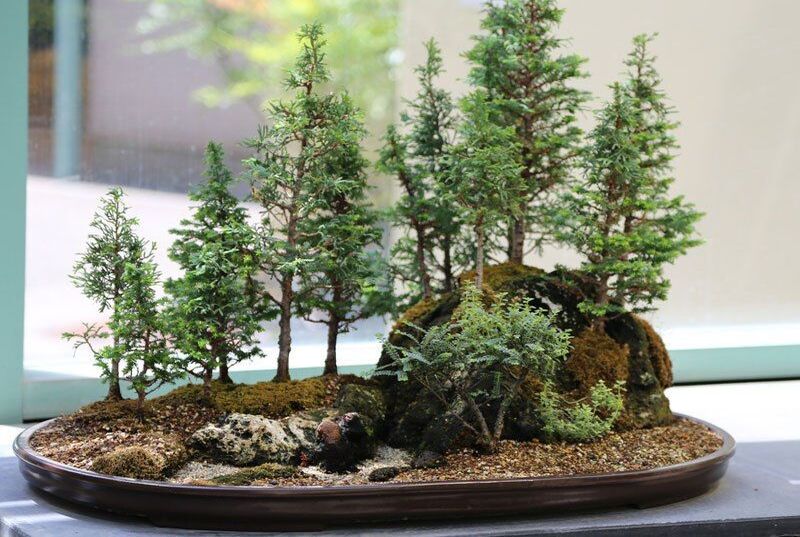
A bonsai forest is a special kind of bonsai. It is not just one small tree, but a group of many miniature trees planted together in one shallow pot or tray. It looks like a tiny real forest!
People usually use an odd number of trees, like 5, 7, or more. The trees are often the same type, with different sizes and heights. The tallest tree goes in front or in the middle, and smaller ones around it. This makes it feel natural, like trees growing in the wild.
The natural environment of the trees utilized in a bonsai forest should be taken into account throughout the design process. For instance, a forest layout that incorporates rocks and hills might better showcase tree species that are indigenous to hilly locations. Native forest trees would appear more at home in a woodland setting that also features a trickling brook or gentle river.
Benefits of Owning a Bonsai Forest
Having a bonsai forest can be good for the environment, your emotions, your education, and even your health.
1.Environmental benefits:
Bonsai forests can help clean the air in your home because plants take in carbon dioxide and release oxygen. They can also make the air more humid, which is good for your skin and lungs.
2. Emotional benefits:
It is well known that bonsai forests provide relaxing and soothing effects. They can bring about calm and tranquility while assisting in the reduction of stress and anxiety. Maintaining a bonsai forest may give one a sense of achievement and purpose.
3. Educational benefits:
Learning about nature and bonsai provides a chance in bonsai forests. These may be used to teach kids on botany, plant maintenance, and environmental stewardship.
4. Health benefits:
A sort of mindfulness exercise that can enhance mental health and wellbeing is taking care of a bonsai forest. Also beneficial to your health and general pleasure are time spent outdoors and engaging in a pastime.
Besides attractive, bonsai forests may be a distinctive and lovely addition to any home. They may be a topic of conversation and a source of satisfaction for the owner.
Types of Bonsai Forest
A Bonsai Forest is a style of bonsai in which several small trees are planted together in one container to represent a natural forest scene. The arrangement of trees follows certain design rules to create balance, depth, and a natural appearance. There are different types of bonsai forests based on tree placement and species selection.
- Formal Forest – Trees are planted in an organized pattern. The tallest trees are usually placed in the center, with shorter trees around them. This style looks planned and symmetrical.
- Natural (Informal) Forest – Trees are arranged in a random and natural way, similar to how trees grow in nature. This style is the most common and realistic.
- Single-Species Forest – All trees in the forest are of the same species. This creates a uniform and harmonious look.
- Mixed-Species Forest – Different types of trees are planted together to add variety in color, leaf shape, and texture.
- Twin or Group Forest – Two main trees act as the focus, with smaller trees planted around them to complete the forest scene.
Bonsai forests help us understand plant growth, ecosystem balance, and artistic design while encouraging patience and creativity.
How to Grow a Bonsai Forest
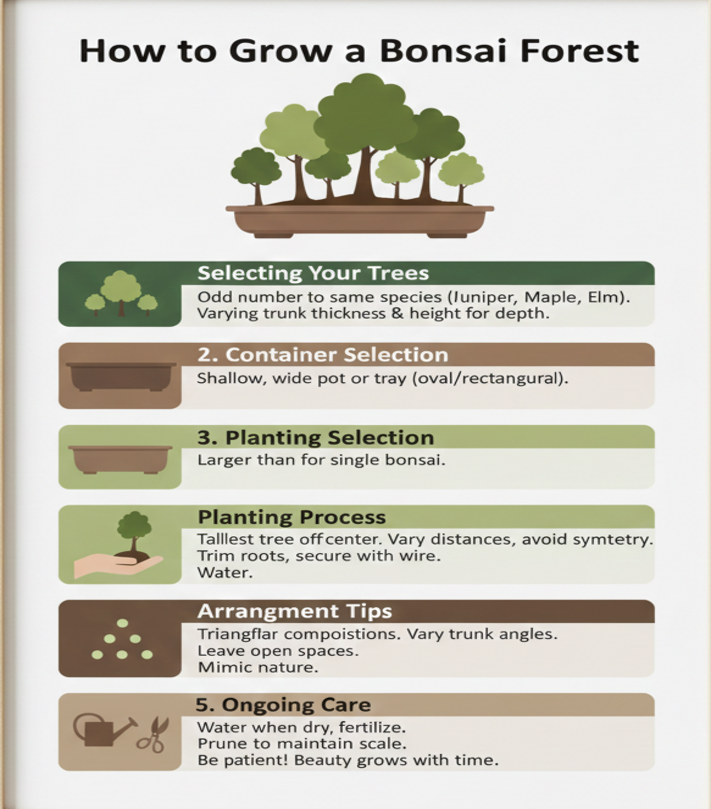
Growing a bonsai forest is a wonderful way to create a miniature landscape. Here’s how to do it:
Selecting Your Trees
Choose an odd number of trees (3, 5, 7, or more) of the same species for visual harmony. Good beginner options include juniper, Japanese maple, or elm. Select trees with varying trunk thicknesses and heights to create depth and a natural appearance.
Container Selection
Use a shallow, wide pot or tray—typically oval or rectangular. The container should be larger than what you’d use for a single bonsai to accommodate multiple root systems.
Planting Process
Start by preparing a well-draining bonsai soil mix. Position your tallest, thickest tree off-center as the focal point, then arrange smaller trees around it at varying distances. Place trees closer together in the foreground and farther apart in the background to create perspective. Avoid symmetrical patterns, nature is irregular.
Trim roots as needed so trees fit together, then secure them with wire through drainage holes if necessary. Fill with soil, working it between roots, and water thoroughly.
Arrangement Tips
Create triangular compositions when viewed from the front. Vary the angles of the trunks slightly. Leave some open spaces—overcrowding looks unnatural. Think about how trees grow in nature: some clustered, some standing apart.
Ongoing Care
Water when the soil surface feels dry, fertilize during the growing season, and prune to maintain scale and shape. As the forest matures, continue refining branch structure and removing any growth that disrupts the composition.
The key is patience, your Bonsai forest will become more convincing and beautiful as the trees mature together over the years.
Caring for Your Bonsai Forest
To make sure the trees in a bonsai forest stay healthy and beautiful, they need regular care and maintenance. Here are some basic principles of bonsai tree care and specific care instructions for a bonsai forest:
- Watering: Bonsai trees need regular watering, but over-watering can be harmful. Water the soil until it is saturated, and then allow the excess to drain out. Check the soil regularly and water when the surface is dry to the touch.
- Fertilizing: Bonsai trees need regular feeding to ensure healthy growth. Use a balanced fertilizer every two weeks during the growing season and reduce the frequency during the dormant season.
- Pruning: Pruning is essential to maintaining the shape and size of your bonsai forest. Remove any dead or damaged branches and prune back new growth to maintain the desired shape.
- Wiring: Wiring is a technique used to shape and train bonsai trees. Use copper or aluminum wire to gently bend and shape branches to the desired position.
- Repotting: Bonsai trees should be repotted every two to five years to ensure that they have enough room to grow. Repot in the spring before new growth appears.
- Pest control: Keep an eye out for pests such as aphids, spider mites, and scale insects. Use insecticidal soap or a commercial insecticide to control infestations.
- Propagation: To add to your bonsai forest, you can propagate new trees by taking cuttings or air layering. This will ensure that your forest continues to grow and evolve over time.
Bonsai Forests Care Sheet
| Aspect | Care Tips |
| Watering | Water the soil regularly, keeping it moist but not waterlogged. Check moisture level by sticking your finger about an inch into the soil |
| Soil | Use well-draining soil with a mixture of organic and inorganic components |
| Fertilizer | Use a balanced, slow-release fertilizer during the growing season |
| Pruning | Regularly prune and shape the trees to maintain their form and encourage healthy growth |
| Wiring | Use wire to shape branches when young and flexible |
| Repotting | Repot the trees every 2-3 years to refresh the soil and promote healthy root growth |
| Pest Control | Watch for pests and diseases, treat promptly if detected |
| Propagation | Propagate new trees by taking cuttings or air-layering |
In addition to these general care guidelines, it is important to research the specific care requirements of the trees in your bonsai forest. Different species may have different watering, fertilizing, and pruning needs. Regular attention and care will ensure that your bonsai forest remains healthy and beautiful for years to come.
Conclusion
A bonsai forest is a distinctive and worthwhile addition to any house, to sum up. You can make a lovely and tranquil forest of miniature trees by following a few easy steps. Your bonsai forest may flourish for years with a little maintenance, giving you a sense of connection to nature and a place of serenity. We urge readers to experiment with growing their own bonsai forest and take advantage of the numerous advantages it may provide.
FAQ:
Q: What is a bonsai forest?
A: A bonsai forest is a group of bonsai trees that are all grown in the same container and made to look like a small forest.
Q: How do I create a bonsai forest?
A: To make a bonsai forest, you need several different kinds of bonsai trees, a good container, soil, and the right tools. To get the look you want, you can start by choosing the trees, putting them in the container, and then trimming and pruning them.
Q: What are the benefits of owning a bonsai forest?
A: Possessing a bonsai forest has several advantages, such as enhancing air quality, encouraging relaxation, and providing a stimulating and instructive pastime. Moreover, it can aid in lowering tension and anxiety and enhancing focus and attention.
Q: How do I care for my bonsai forest?
A: Watering, fertilizing, trimming, and repotting your bonsai forest as needed are all essential maintenance tasks. You’ll also need to make sure your bonsai tree gets enough of whatever kind of light and heat it needs to thrive.
Q: What are some common problems that my bonsai forest might have?
A: Pests and diseases, root rot, too much or too little water, improper pruning, and improper soil are typical issues. The health of your bonsai forest depends on your fast attention to any problems that may arise.
Q: Can I create a bonsai forest indoors?
A: With the right lighting, temperature, and humidity levels, a bonsai forest may be grown successfully indoors. If the available natural light is insufficient, you may additionally need to install artificial lighting.
Q: How long does it take to create a bonsai forest?
A: The time required to produce a bonsai forest is proportional to the size and intricacy of the project, as well as the grower’s level of expertise. While some may be ready in only a few months, others may require many years.
Also Read:
Flame Tree Bonsai: A Unique and Rewarding Hobby for Nature Lovers