Ponderosa Pine Bonsai: A Stunning Tree for Every Bonsai Lover
A Ponderosa Pine Bonsai is a small tree grown from the large Ponderosa Pine. It is known for its strong trunk and long needles. Many people enjoy growing it because it looks old and beautiful even when it is small. This guide will help you understand what a Ponderosa Pine Bonsai is and how to take care of it in an easy and simple way.
What is Ponderosa Pine Bonsai?
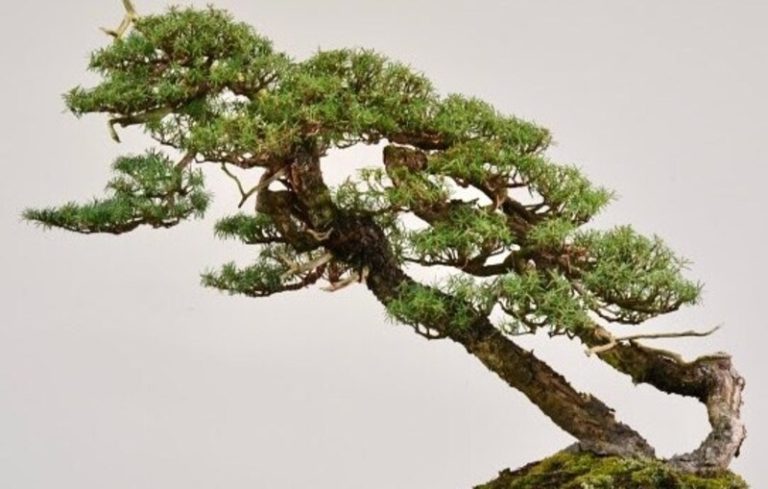
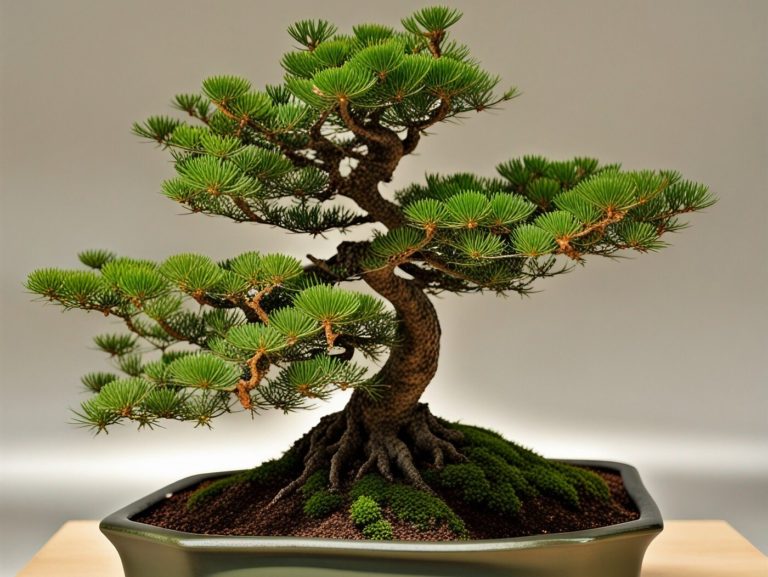
Ponderosa Pine (Pinus ponderosa) is a majestic three-needle pine native to western North America. In nature, these trees grow to heights of 100 to 180 feet, dominating the landscape from British Columbia to Mexico and from the Pacific Coast to the Great Plains. When cultivated as bonsai, Ponderosa Pine creates stunning miniature versions of these mountain giants, capturing their rugged character and distinctive features in trees just 12 to 36 inches tall.
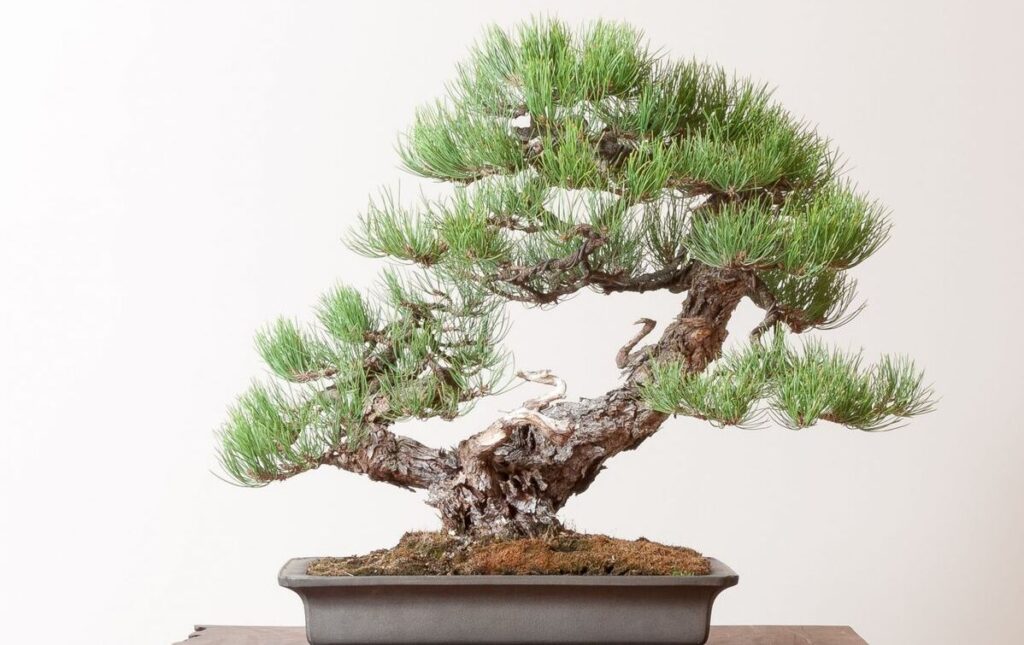
A Ponderosa Pine bonsai showcases the species’ most recognizable characteristics: long needles (4 to 8 inches in natural form, reducible to 2 to 4 inches in bonsai), thick plates of reddish-brown to cinnamon bark, and a naturally irregular growth pattern that suggests windswept mountain ridges. The tree’s common name comes from the Spanish word “ponderosa,” meaning heavy or ponderous, referring to its massive size and dense wood in nature.
For bonsai enthusiasts in western North America, Ponderosa Pine offers something special. It is a native species that connects directly to the local landscape, tolerates a wide range of conditions, and develops the rugged, ancient character that makes great bonsai. Unlike imported Japanese species, you can literally find Ponderosa Pine growing in nearby mountains, foothills, and even some urban parks.
The Natural Character of Ponderosa Pine
Understanding how Ponderosa Pine grows in nature helps you create authentic bonsai:
In the Wild:
- Grows in full sun at elevations from sea level to 9,000 feet
- Tolerates extreme temperature ranges (negative 30°F to 110°F)
- Survives on minimal rainfall (as little as 12 inches annually)
- Develops thick bark that protects against fire
- Forms massive root systems that anchor the tree on rocky slopes
- Lives 300 to 600 years (some specimens exceed 700 years)
Growth Characteristics:
- Young trees have dark, nearly black bark
- Mature bark develops into large, puzzle-piece plates in cinnamon or orange-brown colors
- Needles are bundled in groups of three (occasionally two)
- Cones are 3 to 5 inches long, egg-shaped, with prickly scales
- Natural growth is irregular and asymmetric, shaped by wind and terrain
What This Means for Bonsai: Ponderosa Pine naturally wants to be big, tough, and irregular. Your job as a bonsai artist is not to fight these tendencies but to work with them, creating a miniature that captures the essence of those ancient mountain pines.
Why Grow Ponderosa Pine as Bonsai?
Advantages:
- Native Species Connection – If you live in the western US, this tree represents your local landscape
- Exceptional Cold Hardiness – Survives to zone 3 (negative 40°F)
- Heat Tolerance – Handles 100°F plus summer temperatures
- Drought Tolerance – More forgiving of occasional underwatering than most pines
- Spectacular Bark – The cinnamon-colored plates are distinctive and beautiful
- Long Needles – Create dramatic texture and visual interest
- Readily Available – Easy to find in western nurseries or collect (with permits)
- Affordable – Nursery stock typically costs $15 to $50
Challenges:
- Long Needles – Even reduced needles (2 to 4 inches) are large for smaller bonsai
- Vigorous Growth – Requires regular pruning and pinching
- Slow Fine Ramification – Takes years to develop fine branch structure
- Size – Works best for medium to large bonsai (18 inches plus)
- Three-Needle Bundle – Different technique than two-needle pines
- Limited Bonsai History – Less information available than Japanese Black Pine
Basic Care Overview
Before diving into detailed techniques, here is what Ponderosa Pine needs:
| Care Aspect | Requirement |
|---|---|
| Light | Full sun, minimum 6 hours daily, 8 plus hours ideal |
| Water | When soil surface dry, maintains slight moisture 1 inch down |
| Soil | Well-draining: 60% pumice, 30% lava rock, 10% pine bark |
| Temperature | Hardy zones 3 to 9, tolerates negative 40°F to 110°F |
| Fertilizer | Balanced organic, spring through summer, moderate amounts |
| Pruning | Candle pruning in late spring, needle plucking in fall |
| Repotting | Every 3 to 5 years, early spring before growth |
| Winter Care | Very hardy, minimal protection needed in most climates |
Getting Started with Ponderosa Pine
Option 1: Nursery Stock (Recommended for Beginners)
Landscape nurseries in the western US commonly carry Ponderosa Pine as native landscaping plants. Look for:
- Trees 3 to 7 years old in 1 to 5 gallon containers
- Some trunk movement (avoid perfectly straight poles)
- Low first branch (within lower third of height)
- Good radial root spread at base
- Healthy green needles
Cost: Typically $20 to $60 depending on size
Option 2: Collected Material (Advanced)
Collecting from the wild can yield spectacular material if done legally and properly:
- Obtain necessary permits (National Forests often allow collection)
- Target high-elevation, harsh-site trees (more character)
- Look for naturally stunted trees with thick trunks
- Collect in early spring before growth or late fall
- Take generous root ball
- Expect 50 to 70% success rate
Option 3: Seed Growing (For the Patient)
Growing from seed takes 15 to 20 years to develop bonsai material, but offers maximum control:
- Seeds need 60 to 90 days cold stratification
- Plant in spring in well-draining mix
- Grow in ground or large pots for 5 to 7 years to develop trunk
- Extremely slow process but very rewarding
Soil and Potting
Ideal Soil Mix:
Ponderosa Pine needs excellent drainage:
- 60% pumice (or perlite)
- 30% lava rock
- 10% composted pine bark
This mix drains rapidly while maintaining enough moisture. Water should pass through in seconds, not minutes.
Why This Mix Works:
- Ponderosa grows naturally in rocky, fast-draining mountain soil
- Heavy soil causes root rot quickly
- Good aeration promotes healthy root development
- Pine bark provides some organic nutrition
Pot Selection:
- Unglazed pots in earth tones (browns, tans, oranges)
- Rectangular or oval shapes for most styles
- Size: Pot length approximately two-thirds tree height
- Adequate drainage holes (minimum 3 to 5 holes)
Watering Strategy
Ponderosa Pine is more drought-tolerant than many pines but still needs consistent moisture:
How to Water:
- Check soil moisture daily by feeling surface and 1 inch down
- Water thoroughly when surface is dry but slight moisture remains below
- Water until it flows from drainage holes
- Never let soil become completely dry
- Never let soil stay soggy
Frequency Guide:
- Summer: Daily, possibly twice during extreme heat
- Spring/Fall: Every 2 to 3 days
- Winter: Weekly or less (only to prevent complete drying)
Signs of Correct Watering:
- Needles are vibrant green
- New growth is strong and healthy
- Tree maintains vigor
Signs of Problems:
- Underwatering: Needles lose color, tips turn brown, growth slows
- Overwatering: Yellowing needles, weak growth, root rot
Fertilizing Schedule
Ponderosa Pine grows in nutrient-poor soil naturally, so moderate fertilization is appropriate:
Spring (March to May): Apply balanced organic fertilizer (5-5-5 or similar) every 3 to 4 weeks
Summer (June to August): Continue balanced fertilizer, reduce slightly in extreme heat
Fall (September to October): One application of low-nitrogen fertilizer (0-10-10) in early September
Winter (November to February): No fertilizer during dormancy
Products That Work:
- Organic pellet fertilizer (Biogold, similar products)
- Fish emulsion diluted per label
- Balanced granular fertilizers
Important: Do not over-fertilize. Ponderosa Pine naturally grows in poor soil and excessive feeding causes leggy, weak growth.
Pruning and Needle Reduction
This is where Ponderosa Pine differs from two-needle pines:
Candle Pruning (Late Spring):
- Wait until candles fully extend (usually May to June)
- New needles just beginning to emerge
- Strong candles: Cut back 60 to 70%
- Medium candles: Cut back 40 to 50%
- Weak candles: Cut back 20 to 30% or leave alone
Timing is Critical: The window is narrow (7 to 10 days). Too early and you damage developing needles. Too late and needles fully open.
Needle Plucking (Fall):
This is essential for managing Ponderosa’s long needles and promoting interior growth:
- September to October timing
- Keep current year’s needles
- Remove 50 to 75% of previous year’s needles
- Remove all needles older than 2 years
- Focus plucking on strong areas to redirect energy
Three-Needle Bundle Technique: When plucking, you can remove 1 or 2 needles from a bundle, leaving 1 or 2. This maintains some foliage while reducing mass.
Structural Pruning:
- Best timing: Late winter before spring growth
- Remove unwanted branches completely
- Thin interior to allow light penetration
- Never cut back to areas with no needles (unlike deciduous trees)
Wiring and Styling
Wiring Guidelines:
Best Timing: Late fall through winter when growth is slow
Wire Type: Aluminum for younger branches, copper for thick branches
Technique:
- Wire at 45-degree angle
- Start from trunk, work outward
- Leave wire on 8 to 12 months (Ponderosa grows moderately)
- Check every 2 to 3 months for wire bite
Protection: Use raffia or tape under wire on important areas to prevent scarring
Preferred Bonsai Styles:
- Informal Upright (Moyogi) – Most common, works with natural growth
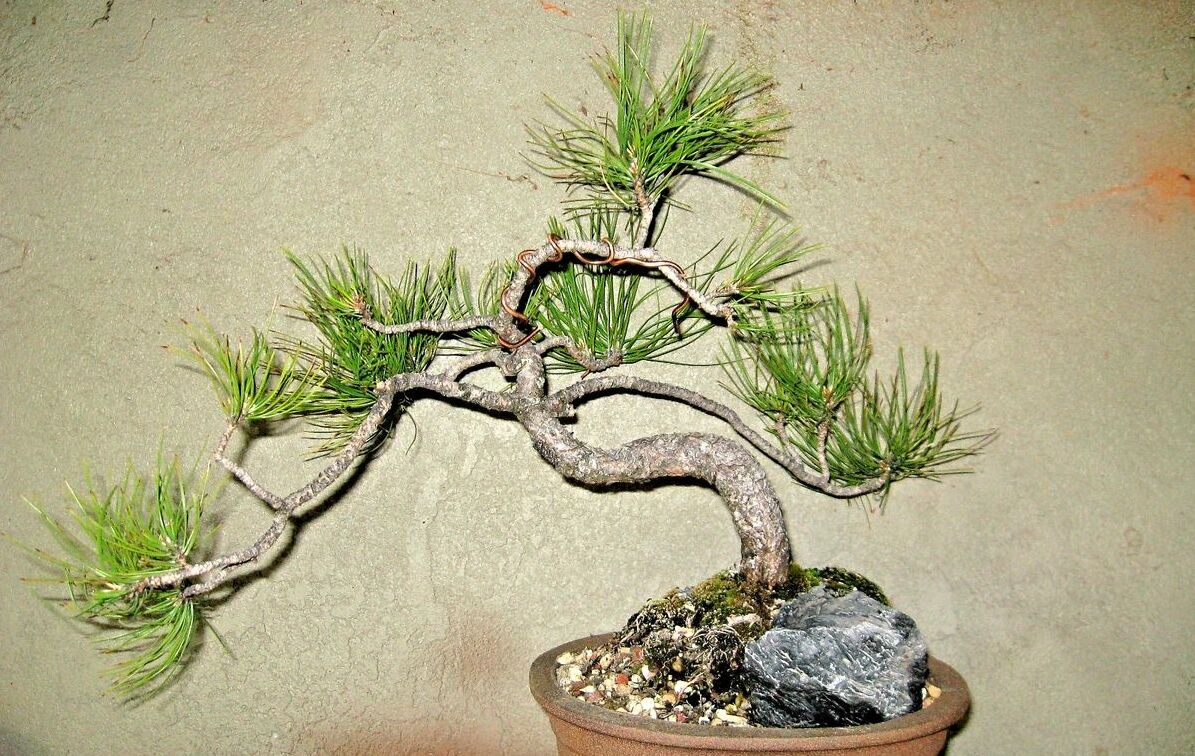
- Slanting (Shakan) – Suggests windswept mountain slopes
- Literati (Bunjin) – Captures harsh high-elevation character
- Windswept (Fukinagashi) – Natural for exposed-site Ponderosa
- Twin Trunk – Common in nature, works well in bonsai
Styles That Don’t Work Well:
- Formal Upright (too rigid for Ponderosa’s character)
- Broom (not suited to conifer architecture)
Repotting Schedule and Technique
When to Repot:
- Young trees (under 10 years): Every 2 to 3 years
- Mature trees: Every 3 to 5 years
- Old specimens: Every 5 to 7 years
Best Timing: Early spring just before buds swell (March to early April in most climates)
Repotting Process:
- Remove tree from pot carefully
- Use root hook to loosen outer roots
- Remove outer 30 to 40% of root mass
- Trim circling roots
- Leave core soil intact around trunk base
- Position in pot with fresh soil
- Water thoroughly
- Protect from wind and extreme conditions for 2 to 3 weeks
Important: Ponderosa Pine tolerates root work reasonably well but be conservative. Never remove more than 40% of roots in one session.
Seasonal Care Guide
Spring (March to May)
Tasks:
- Repot if scheduled
- Begin fertilizing when buds swell
- Plan candle pruning strategy
- Increase watering as growth accelerates
What to Expect:
- Strong new growth
- Candles emerge and extend rapidly
- Tree comes out of dormancy vigorously
Summer (June to August)
Tasks:
- Execute candle pruning
- Water daily in heat
- Continue fertilizing
- Monitor for pests
What to Expect:
- After candling, tree pushes second flush with shorter needles
- Growth slows in extreme heat
- Tree shows strong vigor
Fall (September to November)
Tasks:
- Needle plucking
- Switch to low-nitrogen fertilizer early September
- Reduce watering frequency as temperatures drop
- Prepare for winter
What to Expect:
- Growth slows significantly
- Needles may darken slightly (normal)
- Tree prepares for dormancy
Winter (December to February)
Tasks:
- Minimal watering
- No fertilizer
- Protect from extreme temperature swings (though Ponderosa is very hardy)
- Plan next year’s development
What to Expect:
- Complete dormancy
- No growth
- Tree rests and builds energy for spring
Common Problems and Solutions
Problem: Needles Turning Brown
Causes: Underwatering, overwatering, or natural interior shedding
Solution: Check soil moisture. If too dry, water more consistently. If too wet, improve drainage and reduce watering. Interior needle browning is normal.
Problem: Leggy Growth with Long Internodes
Causes: Too much fertilizer, insufficient light, or inadequate candle pruning
Solution: Reduce fertilizer, ensure full sun, prune candles properly next spring
Problem: Poor Needle Reduction
Causes: Improper candle pruning timing, too much fertilizer, tree too young
Solution: Time candling precisely, reduce feeding, be patient (young trees have longer needles)
Problem: Branch Die-Back
Causes: Insufficient light to interior, too much shading, or weak branch
Solution: Thin foliage to increase light penetration, strengthen weak branches through selective pruning
Problem: Root Rot
Causes: Overwatering, poor drainage, heavy soil
Solution: Improve drainage immediately, reduce watering, emergency repot if severe, trim rotted roots
Species Comparison
Ponderosa Pine vs Japanese Black Pine:
| Aspect | Ponderosa Pine | Japanese Black Pine |
|---|---|---|
| Needles | 3 per bundle, 4-8″ (2-4″ in bonsai) | 2 per bundle, 2-5″ |
| Cold Hardiness | Zone 3 (negative 40°F) | Zone 5 (negative 20°F) |
| Heat Tolerance | Excellent (110°F plus) | Good (95°F) |
| Back-Budding | Moderate | Excellent |
| Growth Rate | Moderate to fast | Moderate |
| Availability (US West) | Excellent | Limited, imported |
| Bark Character | Cinnamon plates | Gray-black fissured |
| Bonsai Tradition | Limited | Extensive |
Best Choice: Ponderosa if you live in western US and want native material. Japanese Black Pine if you want more refined ramification and extensive technique information.
Frequently Asked Questions
Q: Can I grow Ponderosa Pine bonsai indoors?
A: No. Ponderosa Pine must be grown outdoors year-round. It requires full sun, fresh air, and winter dormancy. Indoor conditions will kill it within months.
Q: How long does it take to develop a Ponderosa Pine bonsai?
A: From nursery stock, expect 7 to 10 years for a decent bonsai. Refined, show-quality trees take 15 to 25 years. Collected material can look impressive immediately but still needs years of refinement.
Q: Are Ponderosa Pine needles too long for bonsai?
A: Natural needles (4 to 8 inches) are too long, but proper techniques reduce them to 2 to 4 inches, which works for medium to large bonsai. Best for trees 18 inches or taller.
Q: Can I collect Ponderosa Pine from the wild?
A: In many western states, yes, with proper permits. National Forests often allow personal collection. Always check regulations, obtain required permits, and collect responsibly.
Q: How often should I water my Ponderosa Pine bonsai?
A: When soil surface is dry but slight moisture remains 1 inch down. Typically daily in summer, every 2 to 3 days spring and fall, weekly or less in winter. Always check soil rather than following a fixed schedule.
Q: Is Ponderosa Pine good for beginners?
A: Yes and no. Basic care is straightforward, and the tree is forgiving. However, pine bonsai techniques (candling, needle plucking) require learning. Better for beginners with some bonsai experience than complete novices.
Q: What size bonsai works best for Ponderosa Pine?
A: Medium to large bonsai (18 to 36 inches) work best because of the long needles. Smaller bonsai look out of proportion with 2 to 4 inch needles.
Q: Can Ponderosa Pine survive in hot climates?
A: Yes, excellent heat tolerance. Native range includes areas with 100°F plus summers. Provide afternoon shade in extreme heat (above 105°F) and ensure adequate watering.
Q: How do I make the bark develop that cinnamon color?
A: Patience. Young trees have dark bark. The characteristic cinnamon plates develop over 15 to 30 years. Good growing conditions and time are the only requirements.
Q: Should I remove pine cones from my bonsai?
A: Yes, in most cases. Cones drain significant energy from the tree. Remove them unless you specifically want cones for aesthetic or seed collection purposes.
Resources for Learning More
Books:
- “Bonsai Techniques I & II” by John Naka (pine techniques applicable to Ponderosa)
- “American Bonsai” by various authors (covers native species including Ponderosa)
- “The Complete Book of Bonsai” by Harry Tomlinson
Online Resources:
- Bonsai Mirai (Ryan Neil’s work with American natives)
- Bonsai Nut forums (search “Ponderosa Pine”)
- Local bonsai clubs in western states
Where to See Examples:
- Pacific Bonsai Museum (Seattle, WA)
- National Bonsai & Penjing Museum (Washington, DC)
- Regional shows in Colorado, California, Oregon, Montana
Final Thoughts
Ponderosa Pine represents the rugged beauty of the American West. While it lacks the centuries of bonsai tradition that Japanese species enjoy, it offers something equally valuable: a direct connection to the western landscape and the satisfaction of working with native material that evolved in your local mountains.
The long needles, cinnamon bark, and natural irregular growth create bonsai with distinctive western character. These trees look like they belong on windswept ridges because that is exactly where their ancestors grow.
For western bonsai enthusiasts, Ponderosa Pine offers an opportunity to create bonsai that are authentically regional, capturing the spirit of western mountains in miniature form.
Also Read: